

What is a Utility Token? Why Utility, not value, is what matters

When people talk about blockchain and tokens, the conversation often turns first to cryptocurrencies and how their value develops. But not every token is designed to serve as a digital means of payment or to be traded.
One particular category is known as utility tokens. With these tokens, a different question takes center stage: What specific function does the token serve within a digital product or ecosystem?
A digital key to an ecosystem
The word “utility” refers to usefulness or functionality, and that is precisely the idea behind a utility token.
It can, for example, unlock premium features within a specific digital product, provide access to special services, or offer additional benefits within a platform.
A utility token can be thought of as a digital membership card or key. Holding it may give users access to certain services or features that are unavailable, or only available to a limited extent, to other users.
From Token to Utility Token
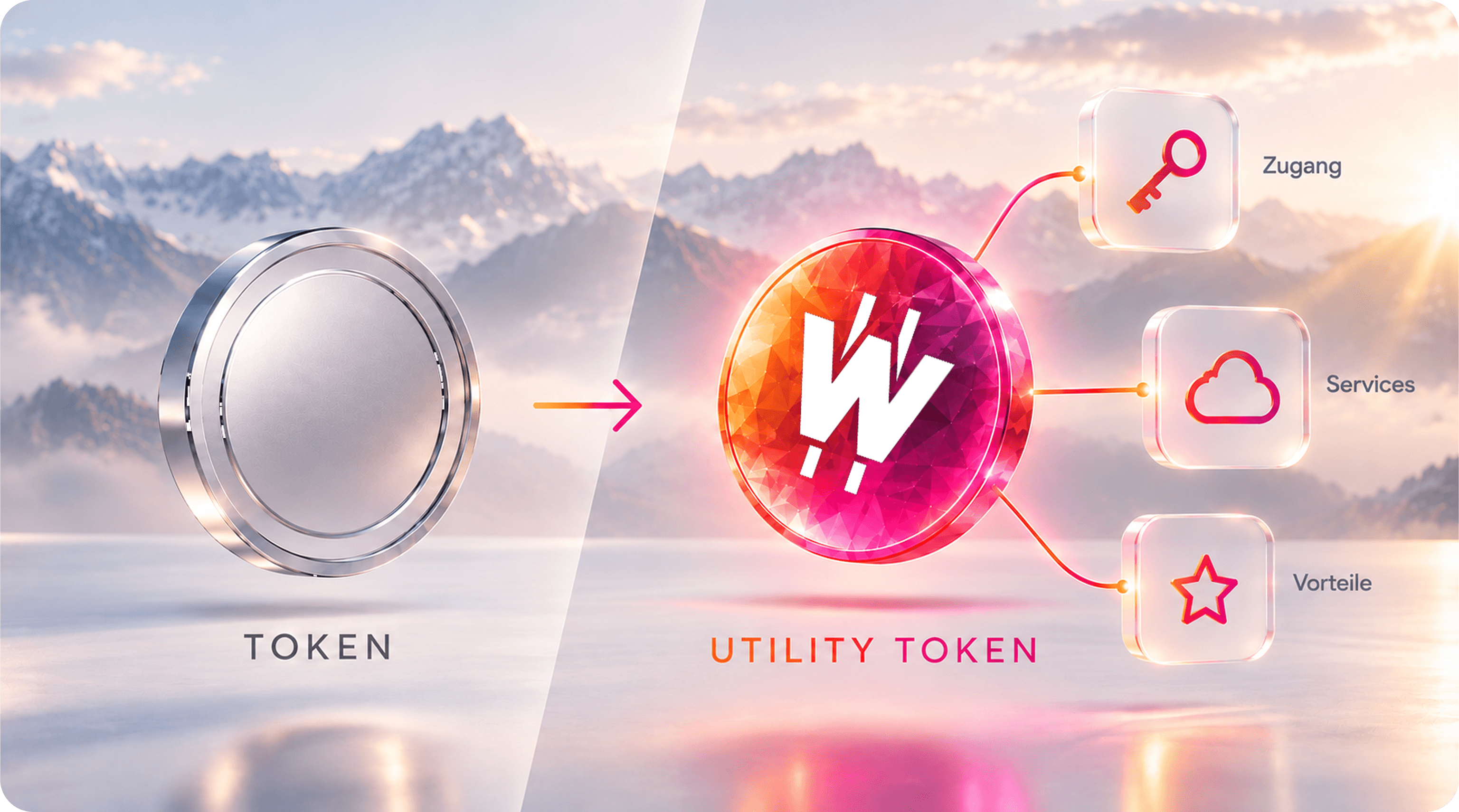
To better understand the term “utility token,” it helps to first look at what a token actually is.
The word itself predates blockchain technology. In English, a “token” can refer to a sign, proof, or a representation of something. Tokens have also long been used in the digital world to represent specific information or permissions.
Blockchain technology, however, opened up entirely new possibilities.
When Bitcoin launched in 2009, the initial focus was on digital money. A few years later, it became clear that blockchains could support a much broader range of applications.
Ethereum marked an important milestone in 2015. Using so-called smart contracts, developers were able to create their own tokens and define the properties and functions those tokens should have.
This made it possible to represent far more than money on a blockchain, for example, access rights, memberships, digital assets, voting rights, or specific functions within a platform.
As a result, “token” evolved into an umbrella term for digital units that can perform a wide variety of functions on a blockchain. Utility tokens are one particular type of token.
What exactly is the difference?
In simplified terms, the distinction can be remembered by asking two questions:
Token – What is it? A digital unit on a blockchain.
Utility token – What is it used for? A specific application or function within a digital ecosystem.
A utility token may still be transferable or tradable. What matters, however, is the function it is intended to perform within the respective system.
Why do companies use Utility Tokens?
Modern digital platforms often consist of numerous interconnected services. Users store data, exchange files, use premium features, or access a variety of digital products and services.
Within such an ecosystem, a utility token can serve as a connecting element. It can, for example, link the use of services with user participation and digital incentive mechanisms.
This means the token does not exist separately from the underlying product. Its function emerges from the way it interacts with the platform’s services and processes.
As a platform continues to evolve, new use cases for the token may emerge as well.
Why WeSendit developed a Utility Token
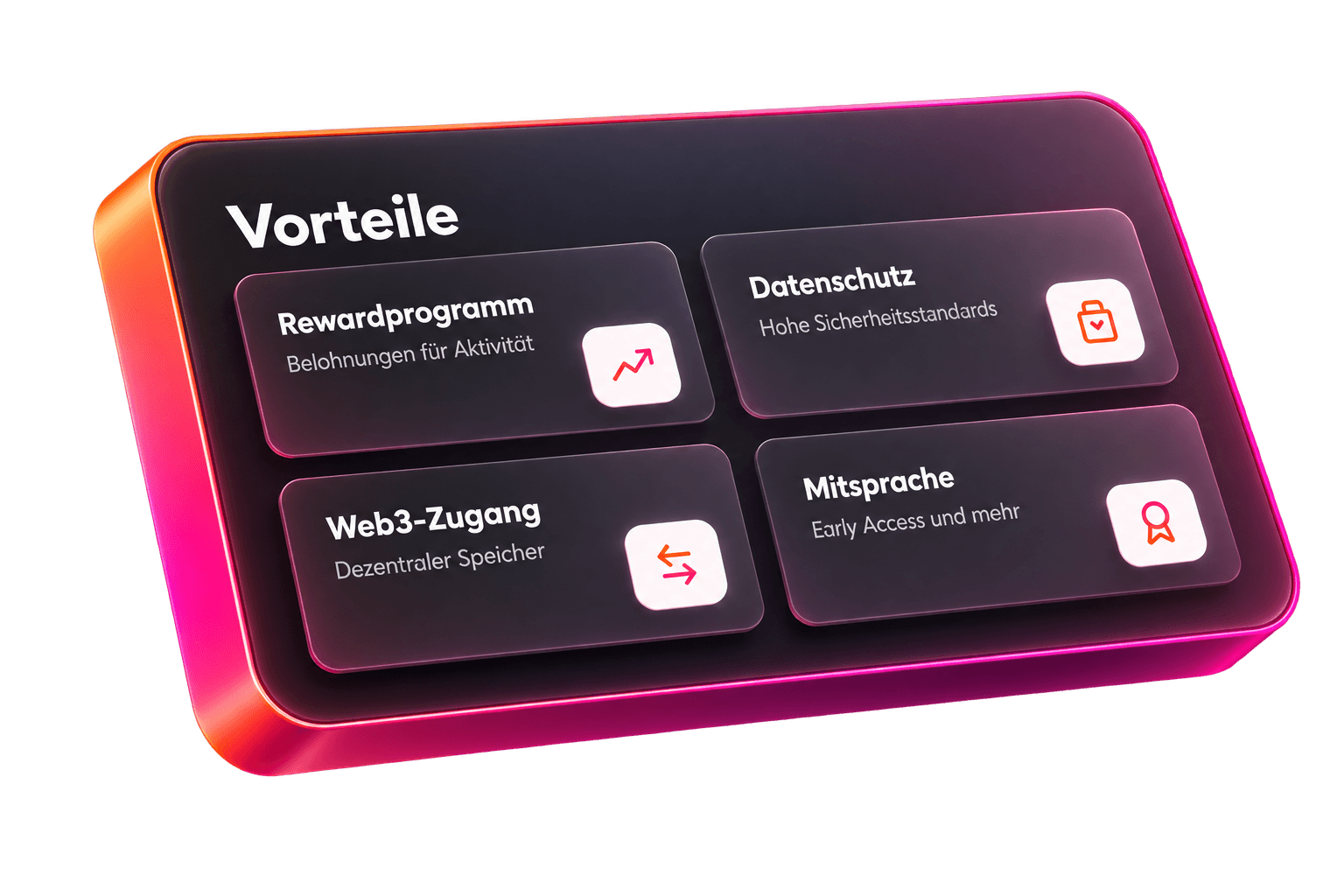
Many blockchain projects begin with a token and then look for a suitable application. At WeSendit, the process was the other way around.
For more than ten years, WeSendit has been developing solutions for the secure transfer and protected storage of large files. The platform is already used by several million users across more than 150 countries.
Building on this foundation, the WSI Utility Token was developed as an extension of the WeSendit ecosystem. Blockchain technology is used selectively in areas where it can meaningfully complement existing services and enable new forms of participation and use.
The starting point is therefore not the token itself, but an established product with a substantial existing user base.
The WSI Utility Token was not designed to replace existing WeSendit products. Instead, it is intended for areas where services, users, and other participants in the ecosystem can be connected through a shared mechanism.
Decentralized Storage and the associated WeSendit Node Network provide an example of how this can work in practice.
→ Learn more about WeSendit Decentralized Storage (opens in new tab)
What role does the WSI Utility Token play in Decentralized Storage and the Node Network?
A decentralized storage network requires technical resources provided by different participants. Within the WeSendit Node Network, node operators can make such resources available and thereby actively contribute to the storage infrastructure.
In this model, the WSI Utility Token is used to connect the provision of these resources with a digital incentive within the WeSendit ecosystem.
In simplified terms, the model works as follows:
- Node operators provide technical resources to the network.
- WeSendit connects and coordinates these resources within Decentralized Storage.
- WeSendit customers can benefit from the resulting decentralized storage infrastructure.
- Node operators are rewarded with WSI Tokens for providing their resources.
- As the WeSendit ecosystem evolves, additional use cases for the WSI Utility Token may be introduced.
This creates a direct link between the infrastructure provided, active participation in the network, and a digital incentive within an actual process of the WeSendit ecosystem. In other words, it connects the provision of technical resources with the corresponding reward mechanism.
However, operating a node is not a requirement for holding WSI Utility Tokens. They can also be acquired independently of operating a node.
→ Find out how to acquire WSI Tokens. (opens in new tab)
The WSI Utility Token evolves alongside the ecosystem
The development of the WSI Utility Token does not end with Decentralized Storage and the Node Network.
As WeSendit continues to evolve, additional use cases may emerge, with the WeSendit community playing an important role in this development.
Future utility features could, for example, enable additional forms of participation within the ecosystem and create stronger connections between different areas of the platform.
What ultimately matters is which additional applications are actually developed and what tangible utility they provide within the WeSendit ecosystem.
Conclusion: Technology creates value when it serves a purpose
A utility token derives its relevance from the role it performs within a digital ecosystem. Ownership, tradability, or price alone are not what define its purpose. The key question is what the token can actually be used for.
For WeSendit, the WSI Utility Token is therefore neither an end in itself nor an isolated product. It is part of the existing and continuously evolving WeSendit ecosystem.
Decentralized Storage and the Node Network illustrate what this connection can look like in practice: node operators provide technical resources and are rewarded with WSI Utility Tokens in return. In this way, the token connects a tangible contribution to the infrastructure with a digital incentive within the ecosystem.
As the ecosystem continues to develop, additional use cases may emerge. The role the Utility Token ultimately plays within the platform over the long term will therefore depend primarily on how it is actually used.
Because in the end, what matters is not how complex a technology is, but what it enables users to do.
Anyone interested in following the next developments around WSI, Decentralized Storage, the Node Network, and the wider WeSendit ecosystem can find further information on WeSendit.com (opens in new tab) and through WeSendit’s channels on LinkedIn, Telegram, and Discord.
WeSendit Team
Editorial
The WeSendit editorial team keeps you up to date with the latest product news, security insights and stories from the world of Swiss file sharing.